
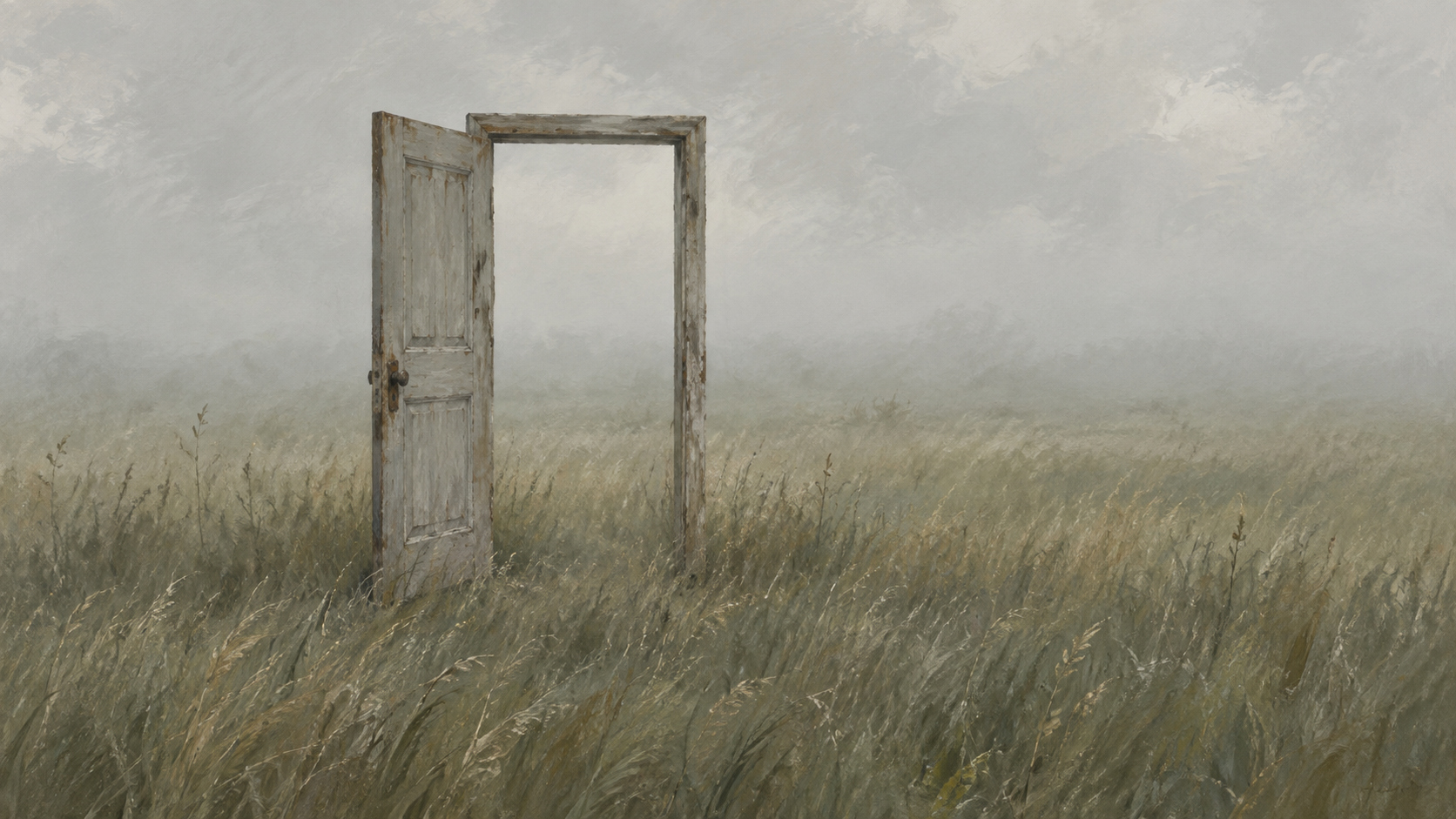
What If
Sometimes I talk to my children about the words what if.
Not because I want them to be afraid of making the wrong choices, and not because I want them to carry my regrets. I think I want them to understand me a little better, but also to understand something I could not have understood at their age: every life has its roads not taken. Every choice takes us somewhere, and quietly leaves somewhere else behind.
When I was younger, I did not think much about that.
I moved quickly. There was always another possibility, another experience, another adventure. I started things, changed direction, tried again. Sometimes I stayed. Sometimes I didn’t. At the time it felt like movement. Life was ahead of me and there would always be another door.
Only later do some doors begin to look different.
There are opportunities I wish I had taken more seriously. Things I wish I had stayed with longer. Dreams I abandoned before I really knew what they might have become.
Some of those regrets still make me sad, some have made me grow, some have done both.
And underneath those regrets there is something harder for me to admit.
Sometimes I wonder whether I fully honoured what I was given.
My parents worked hard to give me opportunities. There were sacrifices behind things that, when I was young, simply looked like possibilities. I could see the open door. I could not yet see what it may have cost them to put it there.
I see that differently now.
There are things my mother and father did for me that I can never truly repay—not because they ever asked me to, but because some forms of love simply cannot be returned in equal measure.
Maybe that is part of what makes some of these memories hurt. It is not only that I wonder what I might have done with an opportunity. I remember who made that opportunity possible.
And somewhere inside that is an even deeper question for me: whether I have honoured the life God gave me.
There are moments when those thoughts bring shame with them.
I could have done more, I could have stayed longer, I could have paid more attention.
But I also know my parents did not love me because of what I achieved. And I do not believe God’s love was waiting for me at the end of some perfectly lived life.
That does not make the regret disappear.
It just makes it harder to turn it into a simple account of what I owe and what I failed to repay.
And then another truth arrives and makes everything less simple.
If some of those dreams had worked out, I might not be here.
I might not be living in this country. I might never have met the partner I adore. My children might not exist.
That thought stops me every time.
Because I cannot honestly say that I wish those other lives had happened.
But I cannot honestly say that I never grieve them either.
I can love this life and still feel sadness for lives I never lived.
Maybe I used to think one of those feelings had to cancel the other.
It doesn’t.
There is something else I have begun to notice about the lives we imagine we missed.
The unlived life never had to become real.
It never had to disappoint me. It never became exhausting or complicated. It never had bills, arguments, ordinary Tuesdays, compromises or mornings when I wondered what I was doing.
It remained possibility, untouched.
The life I actually chose had to become real.
And reality is messier than imagination.
Sometimes I wonder how many years I have spent comparing something real, imperfect and lived with something that never had to survive a single day.
That does not make the regret disappear. I don’t think I want it to.
Can we mourn a future we never actually lived?
There are parts of my life where the answer feels like yes.
A place I might have stayed. Work I might have done.
Something I might have become if I had given it another year instead of moving toward the next thing.
I cannot know whether those lives would have been better. Some may have disappointed me. Some might have cost me things I now cannot imagine losing.
But that knowledge does not erase the ache.
Some regret may remain regret.
It doesn’t all need redemption.
I am trying to become more comfortable with that.
I don’t need to turn every mistake into a blessing. I don’t need to convince myself that every closed door was supposed to close or that everything happened exactly as it had to.
Some things may have happened because I was restless.
Or impatient.
Or afraid.
Or simply too young to recognise what was in front of me.
I cannot go back and make any of those choices again.
All I have is what they have left in me.
Maybe that is why I talk about these things with my children.
I do not want to tell them which doors to walk through. I don’t even know which doors they should walk through.
I want them to understand that choices have weight. That sometimes we do not recognise the important ones while we are making them. That there may come a day when they look backwards and see their own collection of what ifs.
And perhaps I also talk to them because I am still trying to understand my own.
We enter life without the right map.
For a long time I believed that getting older would eventually give me one. That one day I would look backwards and finally understand why I went this way instead of that one, why certain dreams disappeared, why others remained, why some things I wanted never happened.
I am less certain of that now.
Maybe another dream I need to let die is the dream that one day the whole story will make sense.
I still have regrets.
I still have questions.
And I still sometimes look at the roads not taken.
Then I look at my children.
And I realise I am trying to explain what if to them while still learning what it means myself.